

Eight European governments have written to Health Commissioner Olivér Várhelyi demanding tougher restrictions on tobacco and nicotine products. Their proposals include broad flavor bans, nicotine limits, a freeze on new products and explicit room for national bans on nicotine pouches. The letter, published on 6 October, comes from the Netherlands, Belgium, Finland, France, Hungary, Latvia, Slovenia and Spain. Read the letter.
There is a perfectly reasonable ambition behind this initiative. Fewer people should become dependent on nicotine. Children should not become customers of the nicotine industry. On that, there should be no argument.
But good intentions do not make every proposed restriction good policy. Governments must also account for the adult smoker who needs a realistic reason to put down the cigarette.
Our industry’s responsibility
We make smokeless products. Our commercial interest is obvious. That makes scrutiny of our claims necessary. It also makes us willing to say something our own industry needs to hear: stop giving regulators easy targets.
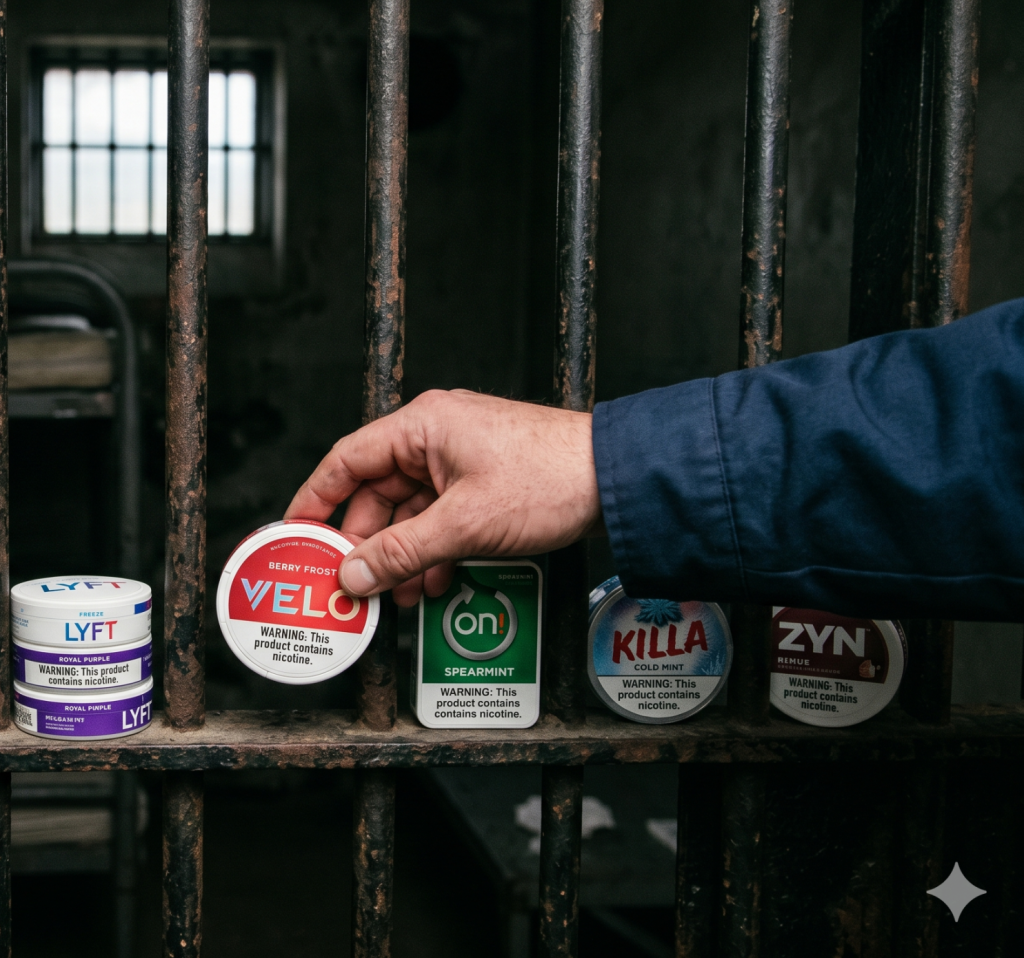
Names such as “Tutti Frutti”, “Sparkling Strawberry” and “Cute Raspberry” invite an entirely predictable question about the audience being courted. A name alone cannot prove a manufacturer’s intentions. But an adult nicotine industry should have enough judgement to avoid making an addictive product sound like something from a sweet shop.
Keep the cartoons, childish branding and youth-oriented promotion out of this business. Enforce age limits. Hold retailers and manufacturers accountable. None of that requires pretending that adults lose their sense of taste on their eighteenth birthday.
Taste is part of whether someone finds a product acceptable. If policymakers want smokers to move away from cigarettes, the acceptability of the alternatives matters. Making those alternatives deliberately less appealing creates a risk that deserves examination: some smokers may simply keep smoking. The burden is on those proposing sweeping restrictions to show that they have considered both sides of that equation.
The distinction between dependence and disease is central here. Nicotine is addictive, and nicotine pouches are not harmless. But the health consequences of a product depend on how it delivers nicotine and what else the user is exposed to.
FDA’s contribution
In June 2026, the US Food and Drug Administration authorized 20 specific ZYN products to carry a claim that using them instead of cigarettes reduces the risk of several serious diseases, including lung cancer, heart disease and stroke. The decision followed a scientific review and applies to those products, not automatically to every pouch on the market. FDA’s decision.
That is a consequential finding. A smoker’s continued nicotine use does not erase the value of leaving cigarettes behind.
There are limits to what we can claim. A 2025 Cochrane review found insufficient evidence to establish how effectively nicotine pouches help people quit smoking. Long-term population outcomes remain uncertain. We cannot honestly promise a particular reduction in cancer cases within a few years. Cochrane review.
We can, however, recognize the substantial opportunity. Pouches deliver nicotine without combustion and produce no second-hand smoke. When a smoker switches completely, the cigarette smoke they would otherwise inhale—and expose other people to—is removed.
The benefits of stopping smoking are well established. Cardiovascular risks begin falling relatively quickly; reductions in cancer risk develop over longer periods. Stopping also protects those around the smoker from second-hand smoke. Those general findings are not a precise forecast for pouch users, but they explain why replacing cigarettes deserves serious attention.
Commercial popularity alone proves no health benefit. Yet a product that adults willingly choose has something public health campaigns spend years trying to create: engagement. The challenge is to turn that demand into complete switching among smokers while preventing uptake among children and people who do not already use nicotine.
Then there is the Netherlands…
The country leading this letter, the Netherlands, tolerates the sale of cannabis in coffee shops under specified conditions and does not prosecute possession of small quantities under its toleration policy. It is also testing a regulated cannabis supply chain. This is not unrestricted legalisation, but it is a deliberate acceptance that control and regulation can be preferable to blanket suppression. Dutch government’s explanation.
Cannabis can impair attention, memory, coordination and reaction time. Nicotine is also a psychoactive drug and carries its own risks; calling one substance “a drug” and the other something else would be scientifically careless. The relevant distinction is the nature of their effects, including cannabis intoxication. CDC on cannabis and brain function.
A government capable of that much nuance over cannabis should be capable of proportionate regulation of a nicotine pouch.
Why does pragmatism become so difficult when an adult wants a smoke-free alternative to a cigarette? The letter’s ultimate ambition is to phase out nicotine dependence. It also calls for products remaining on the market to be regulated to the same extent, to prevent substitution between categories. The ministers’ proposals.
But substitution can be precisely where a health benefit occurs. A framework that treats switching as a problem before examining what people are switching from and to has its priorities badly confused.
Fighting back
Swedish MEP Jonas Sjöstedt has argued that decisions about snus should be taken nationally. His intervention is a useful reminder that this debate reaches beyond the usual political divisions. Sjöstedt’s comments. Countries should have room to pursue approaches that preserve adult access and judge them against measurable health outcomes.
There is plenty for responsible regulation to do: enforce adult-only sales, demand reliable ingredients and manufacturing standards, require clear nicotine labelling, restrict marketing aimed at young people, and monitor what happens to both smoking and nicotine use.
Manufacturers should meet those obligations. Governments should meet an equally basic obligation: distinguish between products according to the evidence, and examine the consequences of making alternatives less available or less acceptable.
Every young person kept free of nicotine dependence is a success. Every adult who leaves cigarettes behind is also a success.
Europe should have a health policy capable of recognizing both.



 EN
EN  SV
SV