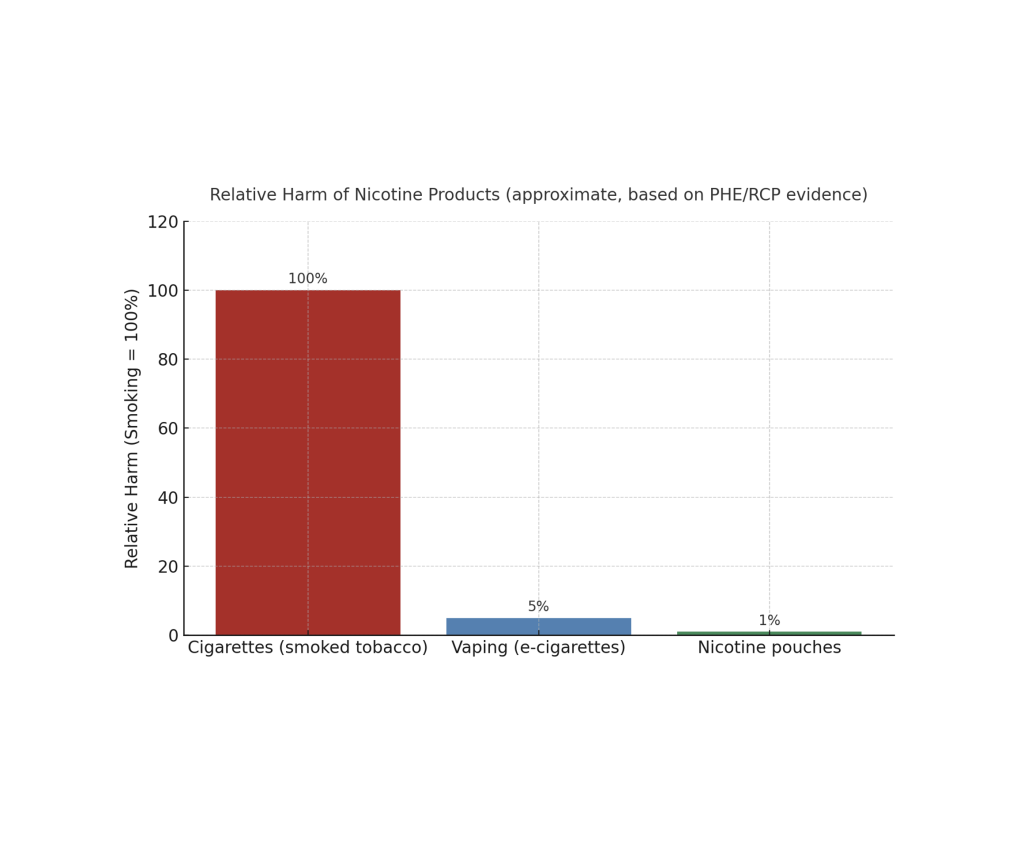

In Sweden, approximately 12,000 people die every year from diseases caused by smoking. Globally, that figure exceeds eight million. Despite this, the public debate has shifted from the major health risks associated with smoking, to a frenetic campaign against products that lack combustion, such as nicotine pouches and e-cigarettes.
It is easy to sympathize with A Non Smoking Generation and others who safeguard public health. They have played an important role in making Sweden largely smoke-free today. It is equally difficult to come from the tobacco industry and ask for the trust required to have a sensible debate. But after witnessing how shamelessly these anti-smoking organizations and interests act, something must be done before we blindly throw the baby out with the bathwater.
From Factual Health Policy to Moralizing Nicotine Warfare
There is a broad consensus in research: the absolute majority of tobacco-related disease and death is caused by the combustion of tobacco. Despite this, organizations like A Non Smoking Generation and VISIR communicate as if all nicotine products were equivalent. The tone is often moralizing: nicotine is wrong, regardless of form, usage, or risk level.
In some cases, it becomes purely ironic when they attempt to portray themselves as victims of the “resource-strong tobacco lobby,” while for every neutral or positive article about nicotine pouches, there are nine aggressively negative ones. This shift in focus causes real damage.
Smoking is the most dangerous and costly of all addictions and bad habits. Nicotine is an addictive toxin that entails certain risks. However, these risks are documented and proven to be far less dangerous than other substances in the segment, such as alcohol, narcotics, and combustible tobacco.
The Rule of Seven – When Repetition Replaces Evidence
A phenomenon that explains the powerful anti-nicotine campaign is what marketing calls “The Rule of Seven”: the idea that a message is perceived as true if it is repeated enough times. By stating, over and over again—seven times, according to the theory—headlines about how dangerous nicotine is, doubt is planted, and people’s perceptions are influenced. Sometimes without any evidence whatsoever backing the arguments.
In recent years, anti-nicotine organizations have fed the media and government actors a steady stream of articles, debate pieces, and campaign materials regarding the alleged risks of nicotine pouches and e-cigarettes. The same message is often repeated in multiple channels simultaneously. This creates an echo effect where a claim is perceived as true, not because the evidence is strong, but because the exposure is high.
Try searching for “nicotine pouches” or the incorrect, but frequently used, term “white snus”. You will find a massive preponderance of articles criticizing the dangers of nicotine. But digging deeper, and looking at the reports that these articles refer to, there is often a discrepancy. They often do not support the claims made in the propaganda. But how many have the energy to do that research?
A Concrete Example: When Interpretation Supersedes Data
The organization A Non Smoking Generation regularly publishes articles and reports on nicotine pouches. Several of these contain scientific references that, upon examination, do not confirm the claims in the text. Far-reaching conclusions are often drawn regarding “serious health risks” based on preliminary studies, hypotheses, or irrelevant data.
There are, of course, legitimate reasons to discuss youth usage, regulation, and product quality. But that is something other than giving the public a false picture of the relative risk compared to cigarette smoking.
The undeniable truth is that “huffing” nitrous oxide, illicit alcohol, and regular alcohol consumption kill young people every year. Accidents with EPA-tractors (modified vehicles) injure and kill young people every year. Yet, the campaigns against nicotine pouches are far more intense and well-funded.
The effect is that more and more people have become afraid of the new nicotine products. Thereby they might chose to continue smoking tobacco instead. Or, to a far lesser extent, start smoking instead of using the new generation smokeless nicotine solutions. With smoking’s proven serious health risks, every smoker is a tragedy.
We Need a Healthy Perspective on Nicotine
It is fully possible, and desirable, to simultaneously protect the young from nicotine use, regulate nicotine products in a reasonable way, and give adult smokers correct information about less harmful alternatives. Public health policy must be built on evidence, not on bad-faith interpretations or moralism.
The “moral high ground” that anti-smoking organizations invoke is built on trust—and trust requires objectivity. But when the fight against nicotine now overshadows the fight against smoking, we lose focus on the real enemy. Which is the terrible damage caused by cigarettes.
Today, only six percent of the Swedish population smoke. This means that organizations like A Non Smoking Generation no longer have the justification for existence that they once had. Moving on and identifying a new main enemy is simply a question of survival for them. But the stakes they are gambling with are thousands of lives and horrific suffering.
It is time to let public health, not groundless propaganda and moral posturing, guide the debate.